
Blog
Difference Between Agarbatti and Dhoop: Which One is Better for Daily Prayer and Fragrance?
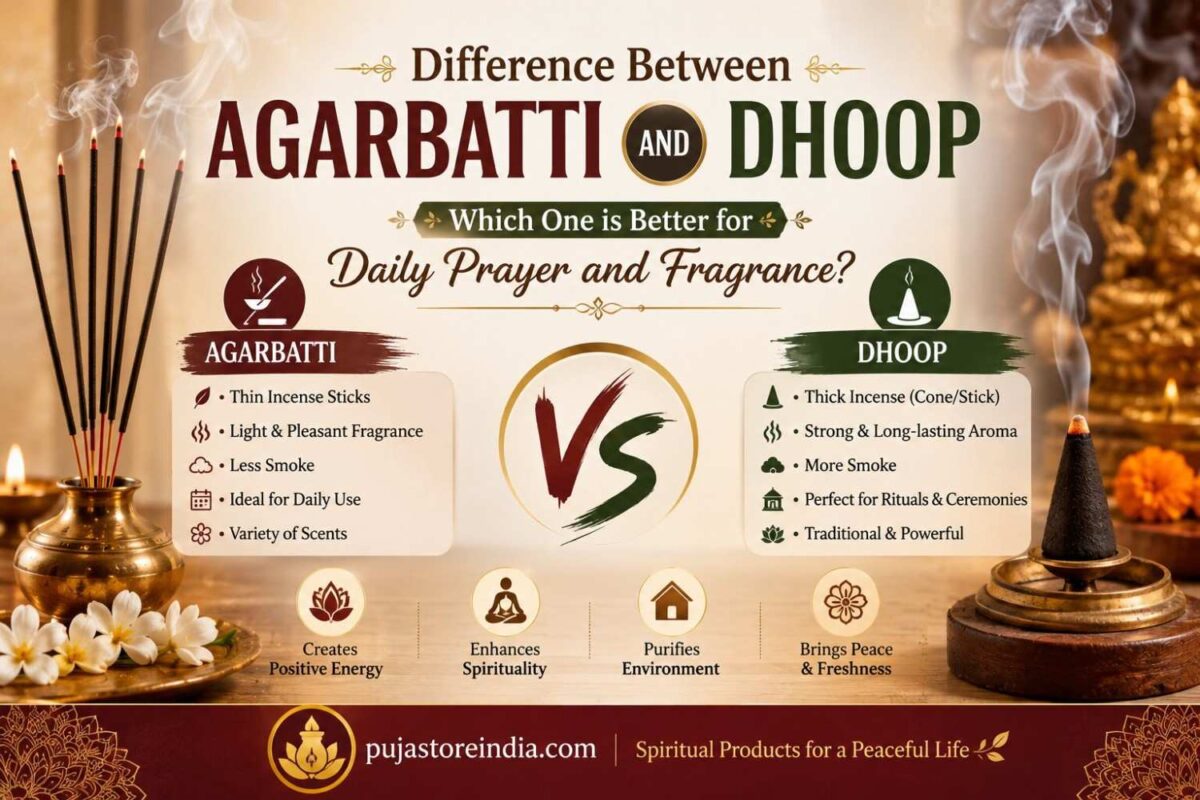
May
Anyone who has entered a prayer room during morning rituals has probably noticed one thing immediately — the calming fragrance floating through the air. That soothing aroma usually comes from either agarbatti or dhoop. Many people use both every day but still wonder about the actual difference between agarbatti and dhoop.
Some believe agarbatti creates a lighter and more pleasant fragrance, while others prefer dhoop because it feels stronger and more traditional. Debate around “which one is better” has quietly existed in homes for years. One family member lights agarbatti because it smells peaceful, while another lights dhoop because “that is how it was always done.” Spiritual discussions somehow become more serious when smoke starts rising.
Truthfully, both have their own purpose, benefits, and atmosphere. Choice mostly depends on personal preference, prayer style, fragrance sensitivity, and even room size.
What Is Agarbatti?
Agarbatti, also known as incense sticks, is one of the most commonly used fragrance products in homes and temples.
Thin bamboo sticks are coated with fragrant paste made from:
- Sandalwood
- Herbs
- Essential oils
- Charcoal powder
- Floral extracts
Once lit, agarbatti burns slowly and releases aromatic smoke into the surroundings.
Why People Love Agarbatti
- Easy to use
- Available in many fragrances
- Creates a calm atmosphere
- Burns evenly
- Affordable and easily available
Some people become loyal to one fragrance for years. Lavender fans defend their choice like sports supporters defending a championship team.
What Is Dhoop?
Dhoop is another type of incense product used mainly during prayers and spiritual rituals. Unlike agarbatti, dhoop usually does not contain a bamboo stick.
Dhoop comes in several forms:
- Cone-shaped
- Thick sticks
- Powder form
- Cups or blocks
Fragrance from dhoop is generally stronger and heavier compared to agarbatti.
Why Many People Prefer Dhoop
- Strong aroma
- More traditional feel
- Longer-lasting fragrance
- Often used during religious ceremonies
- Creates a powerful spiritual atmosphere
Lighting dhoop sometimes makes the entire house smell like a temple within minutes.
Main Difference Between Agarbatti and Dhoop
Many people assume both are exactly the same, but there are several clear differences.
Quick Comparison Table
| Feature | Agarbatti | Dhoop |
|---|---|---|
| Shape | Thin stick with bamboo core | Thick stick or cone |
| Smoke Level | Light to medium | Heavy |
| Fragrance | Mild and pleasant | Strong and intense |
| Burning Time | Moderate | Usually longer |
| Traditional Use | Daily fragrance and prayer | Rituals and ceremonies |
| Bamboo Stick | Present | Usually absent |
| Aroma Spread | Softer | Faster and stronger |
Which One Produces More Smoke?
Dhoop usually produces more smoke than agarbatti.
People who enjoy strong spiritual fragrance often choose dhoop because it spreads quickly across larger areas.
Agarbatti creates lighter smoke, making it more suitable for:
- Small rooms
- Bedrooms
- Meditation corners
- Office spaces
Nobody wants to accidentally transform a tiny apartment into a dramatic movie fog scene.
Difference in Fragrance
Fragrance style is one of the biggest differences between agarbatti and dhoop.
Agarbatti Fragrance
Agarbatti fragrances are usually:
- Floral
- Sweet
- Mild
- Relaxing
Popular agarbatti scents include:
- Rose
- Jasmine
- Sandalwood
- Lavender
- Mogra
Dhoop Fragrance
Dhoop fragrances are often:
- Earthy
- Deep
- Traditional
- Stronger
Many spiritual rituals prefer dhoop because the fragrance feels richer and more intense.
Which One Is Better for Prayer?
Both are widely used during prayer rituals, but usage often depends on the type of spiritual environment someone wants to create.
Agarbatti Works Best For
- Daily morning prayers
- Meditation
- Calm fragrance
- Light spiritual ambiance
Dhoop Works Best For
- Festivals
- Ceremonies
- Temple-style atmosphere
- Deep spiritual rituals
People preparing elaborate prayer setups often combine incense with carefully selected traditional pooja items for spiritual spaces to create a more peaceful and complete environment.
Which One Lasts Longer?
Dhoop generally lasts longer because of its thicker structure and concentrated ingredients.
Agarbatti burns steadily but usually finishes faster.
Burning Time Comparison
| Product | Average Burn Time |
|---|---|
| Agarbatti | 20–45 minutes |
| Dhoop Cone | 30–60 minutes |
| Thick Dhoop Stick | 45–90 minutes |
Actual timing depends on size and material quality.
Which One Is Better for Meditation?
Meditation requires calmness and mental focus.
Many people prefer agarbatti during meditation because:
- Fragrance feels lighter
- Smoke is softer
- Aroma does not overpower the room
Dhoop can also work beautifully for meditation, especially for those who enjoy deeper earthy aromas.
Choice depends entirely on personal comfort.
Traditional and Cultural Importance
Dhoop carries a more ancient and ritualistic association in many spiritual practices.
Agarbatti became more popular for modern daily use because it is:
- Cleaner
- Easier to handle
- Less intense
Both still hold spiritual significance and are commonly used around the world.
Which One Is Easier to Use?
Agarbatti wins this category quite easily.
Why Agarbatti Feels More Convenient
- Simple to light
- Easy ash handling
- Less smoke cleanup
- Available everywhere
Dhoop sometimes needs:
- Heat-resistant holders
- Extra ventilation
- More careful placement
Nobody enjoys cleaning mysterious ash circles from furniture afterward.
Health and Ventilation Considerations
Both agarbatti and dhoop release smoke, so ventilation matters.
Helpful Safety Tips
- Keep windows slightly open
- Avoid excessive smoke buildup
- Use quality products
- Do not place near flammable materials
People sensitive to smoke may prefer mild agarbatti over heavy dhoop.
Which One Is More Natural?
Natural quality depends more on ingredients than product type.
High-quality agarbatti and dhoop often contain:
- Natural herbs
- Essential oils
- Plant resins
- Wood powders
Cheap products sometimes use synthetic chemicals for stronger fragrance.
Reading ingredient labels helps avoid low-quality incense.
Best Places to Use Agarbatti
Ideal Locations
| Place | Why It Works |
|---|---|
| Bedroom | Soft fragrance |
| Meditation Room | Relaxing atmosphere |
| Small Prayer Area | Light smoke |
| Office Desk | Mild aroma |
Agarbatti creates a subtle environment without becoming overwhelming.
Best Places to Use Dhoop
Ideal Locations
| Place | Why It Works |
|---|---|
| Temple Rooms | Traditional ambiance |
| Large Halls | Strong fragrance spread |
| Festivals | Rich spiritual feeling |
| Outdoor Rituals | Powerful aroma |
Dhoop performs especially well in open or larger spaces.
Which One Is Better for Daily Use?
Most people choose agarbatti for daily use because it feels lighter and simpler.
Dhoop is often reserved for:
- Evening rituals
- Festivals
- Spiritual ceremonies
- Special occasions
Still, some households use dhoop every single day because they enjoy the stronger atmosphere.
Price Difference Between Agarbatti and Dhoop
Agarbatti is usually cheaper because it uses thinner materials and smaller fragrance quantities.
Dhoop can cost more depending on:
- Ingredients
- Handmade quality
- Resin content
- Burning duration
Premium sandalwood dhoop sometimes becomes surprisingly expensive for something that eventually turns into smoke.
How to Choose the Right One
Choosing between agarbatti and dhoop depends on several personal factors.
Choose Agarbatti If You Want
- Light fragrance
- Daily usage
- Budget-friendly option
- Less smoke
- Relaxing atmosphere
Choose Dhoop If You Want
- Strong aroma
- Traditional prayer environment
- Long-lasting fragrance
- Rich spiritual ambiance
Many people actually keep both at home and use them according to mood and occasion.
Common Mistakes People Make
Mistakes to Avoid
- Using too much incense in closed rooms
- Buying low-quality products
- Ignoring ventilation
- Placing incense near curtains or paper
Spiritual peace disappears very quickly once smoke alarms start screaming.
Can You Use Both Together?
Yes, absolutely.
Some people combine mild agarbatti with a small amount of dhoop for layered fragrance effects.
Balanced use creates:
- Pleasant aroma depth
- Better room coverage
- Unique spiritual atmosphere
Experimenting with combinations can actually be quite enjoyable.
Conclusion
Difference between agarbatti and dhoop mainly comes down to fragrance strength, smoke level, traditional usage, and personal preference. Agarbatti offers a softer, cleaner, and more relaxing experience, while dhoop creates a stronger and more intense spiritual atmosphere.
Neither one is universally “better” because both serve different purposes. Agarbatti works wonderfully for everyday prayers, meditation, and smaller rooms. Dhoop shines during ceremonies, festivals, and moments when a deeper traditional ambiance is desired.
Many households continue using both depending on mood, season, and occasion. Some mornings feel perfect for light floral incense, while certain evenings practically demand rich temple-like dhoop fragrance.
Most importantly, spiritual rituals are deeply personal. Peace, devotion, and comfort matter far more than choosing one over the other.
FAQs
What is the main difference between agarbatti and dhoop?
Agarbatti contains a bamboo stick and creates lighter fragrance, while dhoop is usually thicker, smokier, and stronger in aroma.
Which one is better for meditation?
Agarbatti is often preferred for meditation because it produces softer fragrance and less smoke.
Does dhoop last longer than agarbatti?
Yes, dhoop generally burns longer because of its thicker structure and concentrated ingredients.
Can agarbatti and dhoop be used together?
Yes. Many people combine both to create a balanced fragrance atmosphere during prayer or relaxation.
Which one produces more smoke?
Dhoop produces more smoke compared to agarbatti.
Is agarbatti safer for small rooms?
Yes, agarbatti is usually better for small rooms because the smoke and fragrance are lighter.
Are natural incense products better?
Natural incense products made from herbs, oils, and wood powders are generally preferred over synthetic chemical-based products.
Why is dhoop used during festivals?
Dhoop creates a stronger spiritual and traditional atmosphere, making it popular during ceremonies and festive rituals.
