
Blog
Benefits and Rules of Wearing Janeyu (Yajnopavita): Meaning, Traditions, and Daily Practices
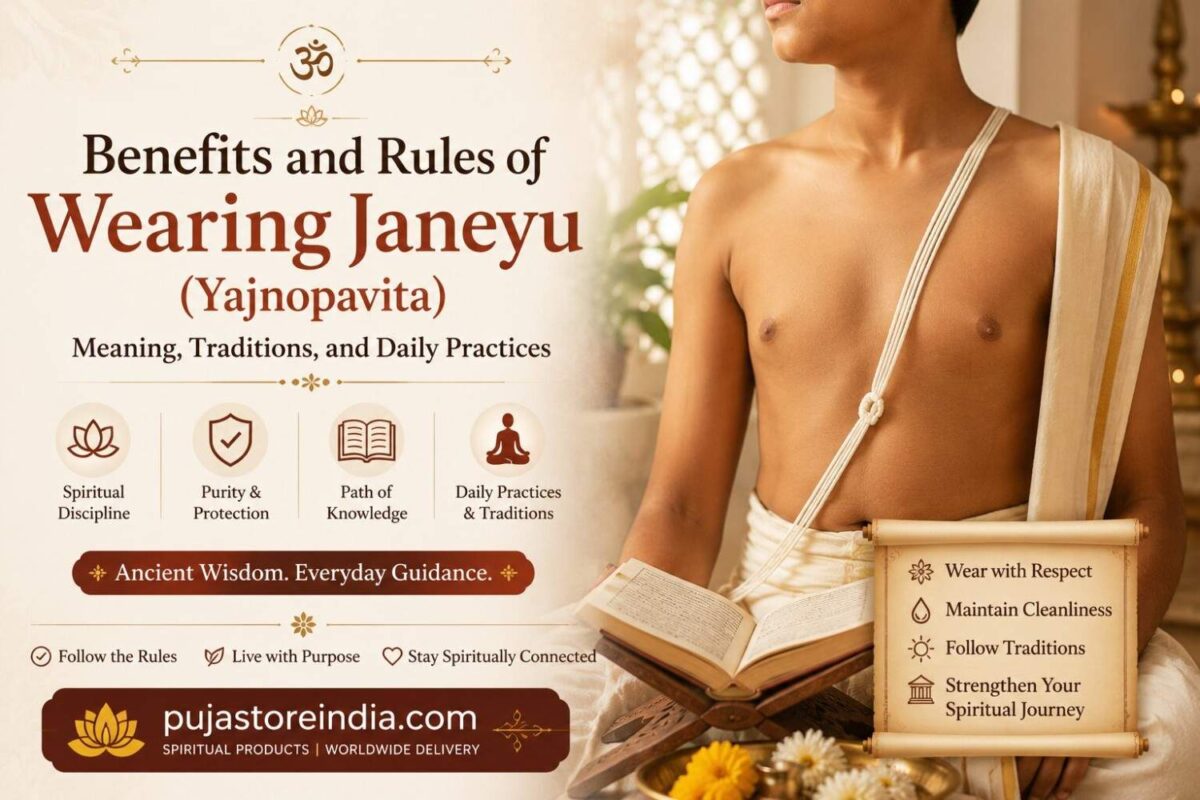
May
Janeyu, also known as Yajnopavita or the sacred thread, holds deep spiritual and cultural significance in Hindu traditions. Many people wear it as a symbol of discipline, purity, responsibility, and spiritual awareness. The keyword sacred thread is commonly searched by people wanting to understand why Janeyu matters and what rules should be followed after wearing it.
A lot of youngsters first notice Janeyu during an Upanayana ceremony and wonder, “Why is everyone suddenly so serious about one cotton thread?” Fair question. At first glance, it may look simple, but spiritually, it carries centuries of meaning, discipline, and symbolism.
Some people wear it because of family tradition. Others follow it as part of religious practice. Many also see it as a reminder to live a more mindful and responsible life. No superhero powers arrive after wearing Janeyu, unfortunately. Bills still exist. Morning alarms still hurt. But spiritually, it is believed to guide a person toward discipline and self-awareness.
What Is Janeyu (Yajnopavita)?
Janeyu is a sacred thread traditionally worn across the left shoulder and chest. It is commonly associated with spiritual learning, purity, and commitment to religious duties.
The Sanskrit word “Yajnopavita” has a deep meaning:
- “Yajna” refers to sacred worship or sacrifice
- “Upavita” means something worn near the body
Together, it represents spiritual responsibility and readiness for disciplined living.
Traditionally, Janeyu is made from cotton threads twisted together in a particular form. Each strand and knot has symbolic meaning connected to spiritual principles and duties.
Historical Importance of Janeyu
Ancient Hindu traditions considered the Upanayana ceremony a major life milestone. After receiving Janeyu, a person was expected to begin spiritual education and disciplined living.
Earlier, students studying scriptures, meditation, rituals, and moral teachings were required to wear Janeyu as a symbol of commitment toward knowledge and self-control.
Modern lifestyles may look very different now, but the symbolic importance still remains strong for many families worldwide.
Why Do People Wear Janeyu?
People wear Janeyu for multiple spiritual and traditional reasons.
Main Purposes of Wearing Janeyu
| Purpose | Meaning |
|---|---|
| Spiritual discipline | Reminder to live responsibly |
| Religious identity | Connection to tradition |
| Purity and mindfulness | Encourages self-control |
| Daily prayer rituals | Important in many ceremonies |
| Respect for knowledge | Symbol of learning |
Janeyu acts almost like a wearable reminder saying:
“Behave properly. Stay disciplined. Don’t do foolish things.”
Sadly, the thread cannot stop people from scrolling social media for three hours straight at midnight.
Spiritual Meaning of the Three Threads
One of the most interesting parts of Janeyu is its symbolic structure.
The Three Strands Often Represent:
- Mind
- Body
- Speech
Some traditions also interpret them differently:
- Knowledge
- Action
- Devotion
Others connect them with:
- Brahma
- Vishnu
- Mahesh
Spiritual symbolism may vary depending on family traditions and regional customs, but the main idea remains discipline, purity, and balance.
Benefits of Wearing Janeyu
Many people believe Janeyu offers spiritual and mental benefits when worn with sincerity and proper understanding.
Creates Spiritual Awareness
Janeyu constantly reminds a person to stay connected with spiritual values and moral discipline.
Daily life gets chaotic very quickly:
- work stress
- endless notifications
- traffic
- bills
- forgotten passwords
Spiritual symbols like Janeyu help people pause and reconnect with inner discipline and calmness.
Encourages Discipline
Traditional practices connected with Janeyu often include:
- regular prayer
- cleanliness
- self-control
- respectful behavior
Following these habits naturally creates structure and discipline in daily life.
Even simple rituals can make people feel mentally organized and spiritually grounded.
Promotes Cleanliness and Purity
Traditional teachings place strong emphasis on hygiene and purity while wearing Janeyu.
This includes:
- bathing regularly
- maintaining cleanliness
- practicing respectful behavior
Honestly, spiritual discipline and personal hygiene are both excellent life skills. Nobody complains about a clean and organized person.
Strengthens Cultural Connection
Wearing Janeyu helps many people stay connected to family traditions and cultural roots.
Modern lifestyles move incredibly fast. Ancient traditions often provide emotional grounding and continuity across generations.
Grandparents especially become very happy when younger family members show interest in these traditions.
Acts as a Reminder of Responsibility
Janeyu symbolizes accountability and maturity.
After receiving the sacred thread, a person is expected to behave responsibly toward:
- family
- society
- spiritual duties
- personal conduct
Basically, it’s one of the oldest “act mature” reminders in human history.
Supports Daily Prayer Practices
Janeyu is closely associated with Sandhyavandanam and other traditional rituals.
Many people who follow spiritual routines use Janeyu as part of:
- chanting
- meditation
- morning prayers
- religious ceremonies
Creating a peaceful prayer environment with authentic traditional pooja items can also help make daily spiritual routines feel more meaningful and organized.
Important Rules of Wearing Janeyu
Janeyu traditions include several rules that vary slightly across communities. Some are strict religious practices, while others focus more on discipline and respect.
Wear It Properly
Janeyu is traditionally worn:
- over the left shoulder
- across the chest
- under the right arm
This position is called “Upavita.”
Incorrect placement during rituals is generally avoided.
Maintain Personal Cleanliness
Cleanliness is considered very important while wearing Janeyu.
Basic Cleanliness Practices Include:
- bathing regularly
- wearing clean clothes
- maintaining hygiene during rituals
Traditional teachings connect outer cleanliness with inner discipline.
Replace Damaged Janeyu
Broken or damaged Janeyu should generally be replaced respectfully.
Many people replace it:
- during sacred ceremonies
- on important spiritual occasions
- after visible damage
Ignoring a damaged sacred thread is considered careless in many traditions.
Do Not Treat It Casually
Janeyu is not considered jewelry or fashion.
Traditional teachings encourage people to treat it respectfully and avoid:
- throwing it casually
- placing it on dirty surfaces
- treating it carelessly
Spiritual symbols are meant to carry respect and mindfulness.
Rules During Religious Activities
Certain rituals and prayers require proper handling of Janeyu.
Examples include:
- changing its position during ceremonies
- touching it with clean hands
- using it respectfully during worship
These practices vary depending on family customs and religious schools.
Avoid Wearing It Improperly
Traditional guidance usually discourages:
- wearing torn Janeyu
- wearing dirty Janeyu
- removing it carelessly
- using it casually
Religious traditions often focus more on sincerity and discipline than outward appearance alone.
Common Mistakes People Make
Modern lifestyles sometimes create confusion around traditional practices.
Frequent Mistakes Include
| Mistake | Why It’s Avoided |
|---|---|
| Wearing damaged Janeyu | Seen as disrespectful |
| Ignoring cleanliness | Against traditional discipline |
| Treating it like fashion | Reduces spiritual meaning |
| Forgetting rituals completely | Disconnects spiritual purpose |
| Wearing it incorrectly | Traditionally discouraged |
Nobody expects perfection immediately. Learning traditions properly takes time.
Even elders spent years understanding these practices fully.
Can Anyone Wear Janeyu?
Different traditions and communities follow different beliefs regarding who may wear Janeyu.
Some families strictly follow hereditary customs. Others focus more on spiritual learning and personal devotion.
Religious practices can vary widely across regions and communities, so people usually follow family traditions or guidance from knowledgeable spiritual teachers.
Importance of Upanayana Ceremony
The Upanayana ceremony is the formal ritual where Janeyu is traditionally given.
This ceremony symbolizes:
- spiritual rebirth
- beginning of disciplined learning
- responsibility toward spiritual life
The event often includes:
- prayers
- family blessings
- chanting
- religious rituals
Young children sometimes look slightly confused during the ceremony, mostly because everyone suddenly becomes extremely emotional around one cotton thread.
Still, it remains one of the most meaningful traditional milestones in many Hindu families.
Janeyu and Daily Life
Many people wonder:
“Can modern lifestyles and traditional practices exist together?”
Absolutely.
Spiritual traditions do not require abandoning modern life. Many people balance:
- careers
- education
- travel
- family life
- spirituality
Janeyu can simply act as a daily reminder to stay disciplined, respectful, and mindful amid modern distractions.
Mental and Emotional Value of Spiritual Symbols
Spiritual symbols often provide emotional comfort and mental grounding.
Janeyu can remind people to:
- stay calm
- act responsibly
- avoid negative behavior
- remain spiritually connected
Life becomes mentally exhausting sometimes. Small spiritual habits often help create emotional balance.
That may sound simple, but simple habits are often the most powerful.
How Janeyu Traditions Are Changing Today
Modern generations approach traditions differently than earlier generations.
Some focus more on:
- symbolic meaning
- spiritual mindfulness
- personal discipline
Others continue following detailed rituals exactly as taught traditionally.
Both approaches usually share one common goal:
maintaining respect toward spiritual values and cultural heritage.
Interesting Facts About Janeyu
Quick Facts Table
| Fact | Details |
|---|---|
| Another name | Yajnopavita |
| Common material | Cotton |
| Traditional ceremony | Upanayana |
| Position | Left shoulder to right side |
| Symbolizes | Discipline and spiritual responsibility |
| Associated practices | Prayer, purity, learning |
FAQs
What is the purpose of wearing Janeyu?
Janeyu symbolizes spiritual discipline, purity, responsibility, and connection to traditional values.
Can Janeyu be removed?
Some traditions allow temporary removal during specific situations, while others prefer continuous wearing. Practices vary across families and communities.
What happens if Janeyu breaks?
Traditional teachings usually recommend replacing it respectfully through proper methods or rituals.
Is Janeyu only religious or also symbolic?
It is both. Many people see it as a spiritual symbol and a reminder of disciplined living.
Why are there three threads in Janeyu?
The three strands symbolize different spiritual ideas such as mind-body-speech balance or knowledge-action-devotion.
Can modern people still follow Janeyu traditions?
Yes. Many people balance modern lifestyles with spiritual traditions successfully.
Conclusion
Janeyu, or Yajnopavita, is far more than a simple sacred thread. It represents discipline, mindfulness, purity, responsibility, and spiritual awareness passed down through generations.
Traditional rules connected with Janeyu are not merely about rituals. Most of them encourage:
- cleanliness
- respectful living
- self-control
- spiritual focus
Modern life often feels noisy and distracting. Ancient traditions like Janeyu continue helping many people stay emotionally grounded and spiritually connected.
Nobody becomes spiritually perfect overnight after wearing a sacred thread. Personal growth still takes patience, sincerity, and effort. Still, symbols like Janeyu quietly remind people to live with greater awareness and responsibility every single day.
And honestly, any tradition that gently encourages discipline without sending motivational emails every morning deserves some appreciation.
