
Blog
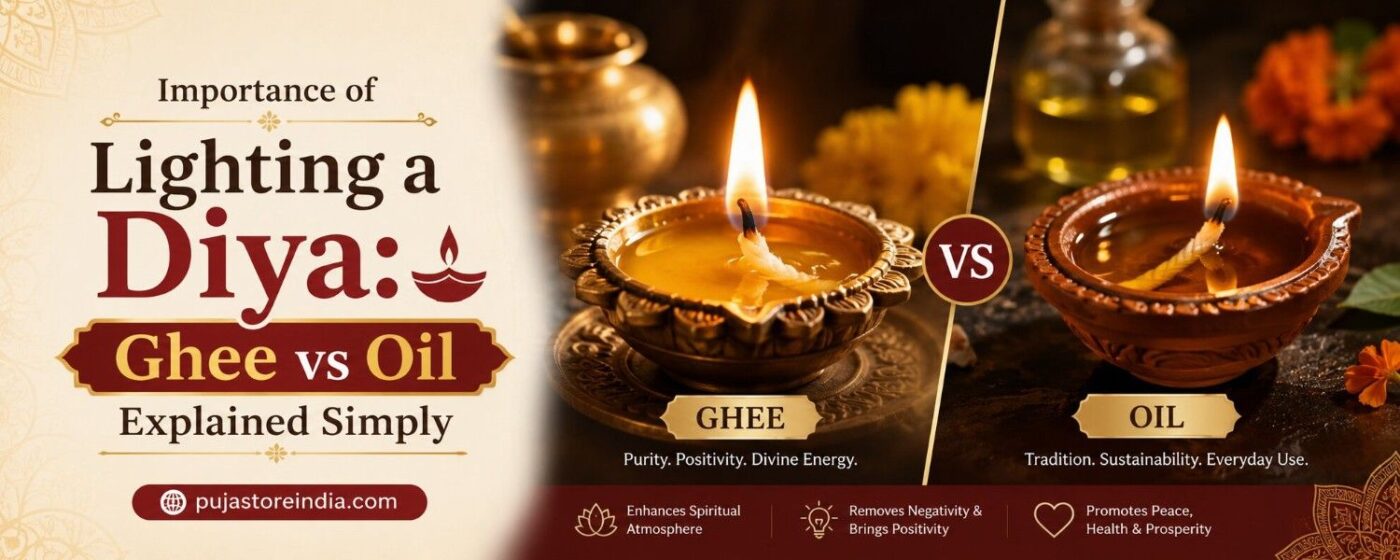
Importance of Lighting a Diya: Ghee vs Oil Explained Simply
May
A small flame can completely change the mood of a room. That tiny glow from a diya does not just brighten a corner of the house; it often brings peace, focus, and a comforting spiritual feeling. Many families across the world continue this beautiful ritual daily, especially during prayers, festivals, and meditation. People searching for ghee vs oil diya often want to understand which one is spiritually better, more practical, or more beneficial for the home.
Funny enough, a diya may be tiny, but discussions around it can become surprisingly serious. One person says ghee is best for positivity, another swears by mustard oil, while someone else just hopes the diya survives long enough before the ceiling fan turns into a mini cyclone.
Both ghee and oil diyas hold deep spiritual meaning. Traditions, beliefs, and personal preferences influence which one people choose. Some households use both depending on the occasion. Understanding the difference can help make daily worship more meaningful rather than confusing.
Why Lighting a Diya Holds Spiritual Importance
A diya represents light over darkness, wisdom over ignorance, and positivity over negativity. Ancient traditions connected the flame with purity, inner awakening, and divine energy.
Many people light a diya during:
- Morning prayers
- Evening worship
- Festivals
- Meditation sessions
- Auspicious occasions
- Spiritual cleansing rituals
A burning flame naturally creates a calm environment. Modern life is full of stress, screens, and endless notifications. A diya offers a rare moment of stillness. Even a two-minute prayer near a softly glowing lamp can feel surprisingly grounding.
Spiritual practices across cultures often include light because humans emotionally connect with warmth and brightness. A diya becomes more than a ritual object; it becomes a symbol of hope.
The Symbolism Behind the Flame
Every part of a diya carries symbolic meaning.
| Element | Symbolic Meaning |
|---|---|
| Flame | Knowledge and positivity |
| Cotton Wick | Human ego or negative thoughts |
| Oil or Ghee | Inner impurities being burned away |
| Earthen Lamp | The physical body |
| Light | Divine presence |
That little flame silently teaches an important lesson: negativity fades when knowledge and positivity grow stronger.
Pretty deep for something that also occasionally spills oil on the prayer shelf.
Understanding Ghee Diyas
Ghee diyas are widely used during sacred rituals and special prayers. Clarified butter, commonly known as ghee, is considered highly pure in spiritual traditions.
Many people believe a ghee diya creates a peaceful and divine atmosphere. Temples frequently use ghee lamps during important ceremonies because of their spiritual significance.
Benefits of Lighting a Ghee Diya
1. Creates a Calm Spiritual Environment
Ghee diyas are often associated with peace and mental clarity. Their flame burns softly and produces a soothing effect.
Prayer sessions with a ghee diya often feel more serene compared to regular lighting.
2. Considered Spiritually Pure
Traditional beliefs describe ghee as sacred. Rituals involving deities, meditation, and spiritual cleansing commonly include ghee lamps.
3. Pleasant Natural Aroma
Pure ghee gives off a mild fragrance while burning. That natural scent can make the prayer area feel warmer and more inviting.
4. Ideal for Auspicious Occasions
Festivals, religious ceremonies, and important spiritual days often involve ghee diyas because they symbolize purity and prosperity.
Understanding Oil Diyas
Oil diyas are equally significant and extremely popular in daily worship practices. Different oils carry different symbolic meanings.
Common oils used include:
- Sesame oil
- Mustard oil
- Coconut oil
- Olive oil
- Castor oil
Oil lamps are practical, economical, and easy to maintain for regular use.
Benefits of Lighting an Oil Diya
1. Suitable for Daily Worship
Oil diyas are commonly used every morning and evening because they burn longer and require less maintenance.
2. Associated With Protection
Many traditional beliefs connect oil lamps with removing negativity and protecting the household from negative energies.
3. Longer Burning Time
Certain oils help the diya burn steadily for longer durations compared to ghee.
4. Budget-Friendly Option
Daily worship becomes easier and more affordable when using oil lamps regularly.
Nobody wants to panic every week after discovering their “premium organic temple ghee” vanished faster than snacks during movie night.
Ghee Diya vs Oil Diya: Key Differences
Understanding the practical and spiritual differences helps people choose wisely.
| Feature | Ghee Diya | Oil Diya |
|---|---|---|
| Spiritual Significance | Highly sacred and pure | Protective and grounding |
| Flame Quality | Softer and brighter | Steady and long-lasting |
| Aroma | Mild pleasant fragrance | Depends on oil type |
| Usage | Festivals and rituals | Daily worship |
| Burning Duration | Moderate | Usually longer |
| Cost | More expensive | More economical |
| Maintenance | Requires frequent refilling | Easier for daily use |
Which Diya Is Better Spiritually?
No single answer fits everyone.
Spiritual traditions differ from family to family. Some people use ghee diyas for blessings and oil diyas for protection. Others choose according to the deity being worshipped.
General beliefs often include:
- Ghee diya for peace, prosperity, and divine blessings
- Oil diya for removing negativity and daily spiritual balance
Personal devotion matters far more than debating which flame has a better personality.
A sincere prayer with a small oil diya often carries more meaning than a distracted ritual performed with expensive materials.
Best Direction to Place a Diya
Placement also matters in many traditions.
| Direction | Belief Associated |
|---|---|
| East | Spiritual growth |
| North | Prosperity and wisdom |
| West | Emotional balance |
| South | Usually avoided in daily worship |
Safe placement is equally important. Curtains and open flames are not exactly best friends.
Morning vs Evening Diya Lighting
Both timings hold significance.
Morning Lighting
Morning diyas symbolize:
- Fresh beginnings
- Positive energy
- Mental clarity
- Spiritual focus
Evening Lighting
Evening diyas create:
- Peaceful surroundings
- Protection from negativity
- A calming atmosphere after a stressful day
Evening diya lighting has a comforting charm. The soft glow feels especially beautiful after sunset.
Choosing the Right Wick for a Diya
The wick influences how the diya burns.
Types of Wicks
- Cotton wick
- Long wick
- Round wick
- Double wick
Common Beliefs
| Wick Type | Traditional Meaning |
|---|---|
| Single Wick | Peace and balance |
| Double Wick | Prosperity and harmony |
| Long Wick | Strong spiritual energy |
A badly placed wick can also create enough smoke to make the room resemble a dramatic movie entrance scene.
Scientific Perspective Behind Lighting a Diya
Traditional practices often contain practical benefits too.
Mental Relaxation
Watching a steady flame can calm the mind and improve focus during meditation.
Stress Reduction
Simple spiritual routines create emotional stability and reduce anxiety.
Positive Routine Building
Daily rituals bring discipline and consistency into life.
Modern lifestyles often move at overwhelming speed. Lighting a diya encourages a short pause that helps mentally reset the day.
Common Oils Used in Diyas and Their Meaning
Sesame Oil
Often associated with protection and removing negative energy.
Mustard Oil
Commonly used in evening prayers and traditional rituals.
Coconut Oil
Popular in many spiritual traditions because of its purity.
Olive Oil
Some people prefer olive oil due to availability and cleaner burning.
Mistakes People Often Make While Lighting a Diya
Small mistakes are common, especially during rushed mornings.
1. Using Impure Materials
Clean oil, fresh wicks, and proper diya maintenance matter.
2. Placing the Diya Unsafely
Open flames should never be placed near paper, curtains, or unstable surfaces.
3. Ignoring Consistency
Regularity matters more than elaborate rituals done once in a while.
4. Overfilling Oil
Overenthusiastic oil pouring can turn a peaceful prayer corner into a cleaning project.
Creating a Peaceful Prayer Space at Home
A dedicated spiritual corner enhances the diya experience.
Simple additions can make the area feel more peaceful:
- Fresh flowers
- Incense
- Soft lighting
- Sacred books
- Small deity idols
- Clean prayer cloths
Many households also decorate their worship space with beautiful spiritual accessories and traditional worship essentials. Carefully selected pooja items can help create a calm and spiritually uplifting prayer environment while maintaining a traditional touch.
Does the Type of Diya Material Matter?
Yes, many people believe it does.
Clay Diyas
Traditional and eco-friendly.
Brass Diyas
Durable and commonly used in temples.
Silver Diyas
Considered auspicious during festivals and ceremonies.
Copper Diyas
Associated with spiritual purity in some traditions.
Each material offers a unique appearance and symbolic value.
Why Many Families Continue This Tradition Today
Modern homes may have smart lights, scented candles, and voice-controlled gadgets, yet the diya still holds emotional value.
That simple flame creates a connection to:
- Family traditions
- Spiritual roots
- Inner peace
- Daily mindfulness
Technology changes rapidly, but human emotions remain surprisingly similar across generations.
A diya reminds people to slow down, reflect, and appreciate small moments.
Cultural Importance Across Festivals
Diyas play a major role during many celebrations.
Diwali
Represents victory of light over darkness.
Navratri
Used during prayers dedicated to divine feminine energy.
Kartik Month Rituals
Special diya lighting practices are followed in many traditions.
Daily Temple Worship
Temples regularly use lamps during morning and evening rituals.
Festivals feel incomplete without rows of glowing diyas adding warmth and beauty everywhere.
Can You Use Both Ghee and Oil Diyas Together?
Absolutely.
Many households combine both depending on the purpose.
Common combinations include:
- Ghee diya for the deity
- Oil diya near the entrance
- Ghee diya during special prayers
- Oil diya for regular daily worship
Flexibility makes spiritual practices more practical and meaningful.
Simple Tips for Beginners
Starting small is perfectly fine.
Easy Beginner Tips
- Use a stable diya holder
- Start with one small diya
- Keep extra cotton wicks nearby
- Maintain cleanliness around the prayer area
- Light the diya mindfully rather than mechanically
A peaceful mindset matters more than perfection.
Frequently Asked Questions
Which is better for daily worship: ghee or oil diya?
Oil diyas are commonly preferred for daily worship because they burn longer and are cost-effective. Ghee diyas are often used for special rituals and auspicious occasions.
Can both ghee and oil be mixed in one diya?
Some people do mix them, but many traditions prefer using either pure ghee or a single type of oil separately.
Which oil is most commonly used in diyas?
Sesame oil and mustard oil are among the most commonly used oils for traditional diya lighting.
Does lighting a diya really create positive energy?
Many people believe it does. A diya creates a calming atmosphere that promotes peace, focus, and emotional comfort.
How long should a diya burn?
That depends on personal preference and ritual practices. Even a small diya lit with devotion is considered meaningful.
Is it necessary to light a diya every day?
Daily lighting is a personal spiritual choice. Many families light diyas every morning and evening as part of their routine.
Conclusion
Lighting a diya may appear simple, but its meaning runs much deeper than a small flame. Ghee and oil diyas both hold spiritual value and emotional significance. One represents purity and divine blessings, while the other symbolizes protection and balance.
Choosing between the two depends on personal beliefs, traditions, and practical needs. Some people prefer the rich spiritual symbolism of ghee, while others appreciate the convenience and steady burn of oil lamps.
Daily diya lighting also offers something modern life desperately needs: a pause. A few quiet moments near a glowing flame can bring clarity, calmness, and emotional warmth after a busy day.
Perhaps that is why this timeless tradition continues generation after generation. A diya may be small, but the comfort it brings can quietly light up an entire home.
