
Blog, English Guide
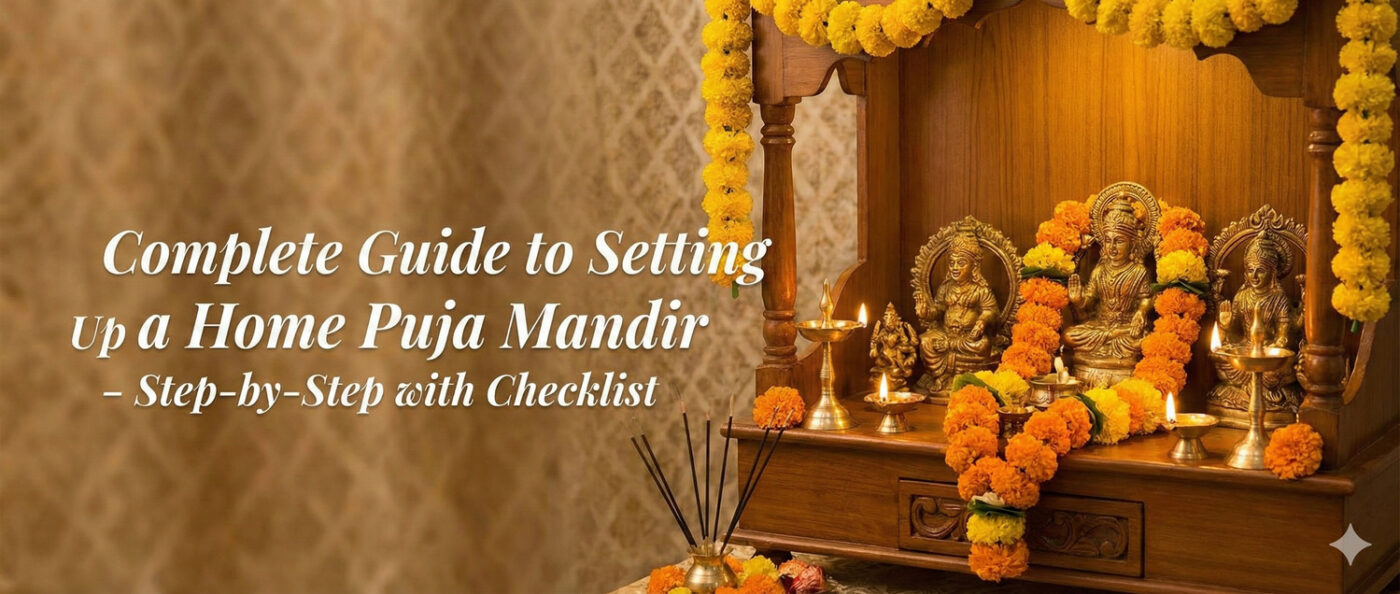
Complete Guide to Setting Up a Home Puja Mandir – Step-by-Step with Checklist
Jan
Setting up a home puja mandir sounds easy until the moment you actually try doing it. Suddenly, the mind is full of questions. Which idol comes first? How big should it be? Is one diya enough or do gods secretly prefer three? This guide exists exactly for that confused moment. The goal here is simple: remove stress, reduce confusion, and help beginners build a peaceful puja space without overthinking every step.
This article explains everything slowly and practically, almost like a calm priest who talks in plain language and doesn’t scare you with complicated rules. You’ll learn what items are actually required, how to choose the right idol size, how to decorate without turning your puja corner into a wedding stage, and how to create a simple but powerful mandir at home.
Why a Home Puja Mandir Matters More Than You Think
A puja mandir is not just a shelf with idols sitting quietly. It becomes the most peaceful corner of the house, the place where mornings start gently and evenings slow down. Many people believe a separate room or expensive wooden temple is compulsory. Truth is much kinder than that. Even a small, clean corner works beautifully when arranged with intention.
Daily prayers become easier when everything has its place. Searching for incense sticks at 6 AM or balancing a diya on a random plate tests devotion more than life already does. Order brings discipline, and discipline slowly brings calm. That calm is the real gift of a home mandir.
Step 1: Choosing the Right Place for Your Puja Mandir
The most common beginner mistake is choosing convenience instead of calm. A puja mandir should not compete for space with shoes, Wi-Fi routers, or laundry baskets.
Keep these points in mind:
-
Choose a clean and quiet corner of the house
-
East or North-East direction is ideal if possible
-
Avoid placing the mandir directly on the floor
-
Keep distance from bathrooms and heavy storage areas
Apartment living does not require panic. A wall-mounted mandir or a simple shelf works perfectly well. Gods don’t measure devotion using square feet.
Step 2: Selecting the Right Deity Idol (Yes, Size Matters)
Buying an idol is emotional, but a little logic saves future regret. Bigger is not always better. A huge idol squeezed into a small shelf looks uncomfortable, even spiritually.
Ideal Idol Size Guide
| Mandir Space | Ideal Idol Size | Best For |
|---|---|---|
| Small shelf or wall unit | 4–6 inches | Daily puja, apartments |
| Medium table mandir | 8–12 inches | Family prayers |
| Dedicated puja room | 12–18 inches | Festivals, detailed rituals |
Choose idols that match your daily worship habits. A simple Ganesha or Lakshmi idol works beautifully for regular prayers. Multiple idols are allowed, but overcrowding leads to confusion during rituals and cleaning.
Step 3: Daily Puja Essentials You Actually Need
Many people overspend during the first setup and later realize half the items are never used. Daily puja needs a small but complete set that is easy to manage.
Daily essentials include:
-
Main deity idol or framed image
-
Diya (brass or clay)
-
Incense or dhoop holder
-
Puja bell
-
Puja mat or asan
-
Small water vessel (lota or kalash)
These essentials are easily available under Idols, Pooja Articles, and Puja Mats sections on reliable spiritual stores. Decorative extras can wait. Consistency cannot.
Step 4: Diya, Incense, and Small Things That Make a Big Difference
A diya is not just a source of light. Lighting it signals prayer time to the mind. Doing this daily builds a habit faster than motivation ever will.
Incense sticks or dhoop help create a clear mental separation between daily chaos and prayer time. Choose mild fragrances. If your eyes start watering before devotion begins, the incense has crossed the line.
Step 5: Using Puja Mats for Comfort and Discipline
Standing barefoot on cold tiles during prayer is brave, but unnecessary. A puja mat offers physical comfort and mental focus. It defines your space and helps maintain posture.
Mats also protect knees and back during longer prayers. Devotion should warm the heart, not damage the joints.
Step 6: Temple Décor That Looks Peaceful, Not Noisy
Decoration should support prayer, not distract from it. Wall murals and temple models are helpful here. They add depth and structure without renovation or drilling headaches.
Good décor ideas include:
-
Wall murals to create visual focus behind the idol
-
Temple models for a traditional feel in small spaces
-
Soft, warm lighting for calmness
Avoid too many colors or blinking lights. A mandir should feel timeless, not like a festival stall.
Step 7: Organizing Puja Items the Smart Way
Mess destroys devotion faster than laziness. Keep daily-use items within reach and store festival-only items separately.
A small drawer, basket, or tray near the mandir works well. When every item has a fixed place, daily puja becomes effortless instead of chaotic.
Complete Product Checklist for Beginners
| Category | Items |
|---|---|
| Idols | Main deity idol or framed image |
| Pooja Articles | Diya, incense holder, bell, kalash |
| Puja Mats | Asan for sitting or standing |
| Temple Models | Optional decorative structure |
Most of these items are easily available at https://www.pujastoreindia.com/, making it convenient to set up your mandir without visiting multiple shops.
Common Beginner Mistakes to Avoid
-
Buying too many idols at once
-
Ignoring cleanliness
-
Placing the mandir too low
-
Using overpowering fragrances
Simplicity is not lack of devotion. It is clarity of devotion.
Frequently Asked Questions (FAQs)
How many idols should be placed in a home mandir?
One or two main deities are ideal for daily worship. Too many idols create confusion and crowd the space.
Can a small apartment have a proper puja mandir?
Yes. Wall-mounted mandirs, shelves, or a small table setup work perfectly.
Is a wooden mandir necessary?
No. Devotion matters more than material. Clean shelves and temple models work just as well.
How often should puja items be cleaned?
Light cleaning daily and deeper cleaning once a week keeps the space fresh and respectful.
Conclusion
Setting up a home puja mandir is less about strict rules and more about rhythm. When the space feels calm, organized, and personal, prayer becomes natural instead of forced. Beginners often overthink and under-enjoy the process. This guide exists to remove fear and replace it with clarity.
Start small, stay consistent, and let devotion grow naturally. Gods appreciate sincerity far more than perfection.
